
Deeper read · Dharma Pitch editorial
Why Do Indians Touch the Feet of Elders?
At a doorway, before a wedding, after a long absence: a younger person bends, an elder offers a blessing. The gesture is familiar. Its meanings are older, varied — and less scientific than the internet often claims.
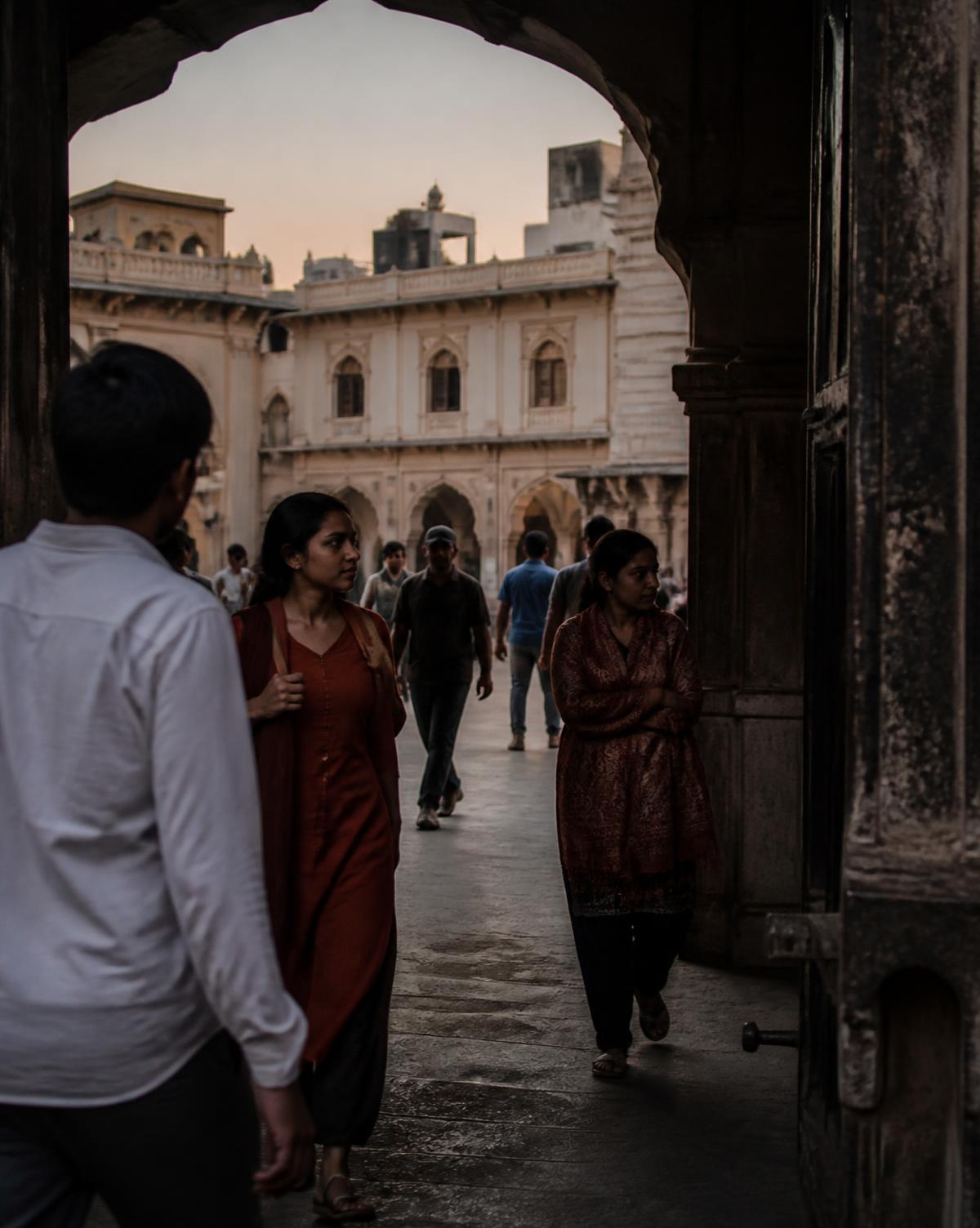
The movement may take only seconds. A person bends towards an elder's feet; the elder touches their head or raises a hand. What passes between them depends on far more than the gesture alone.
The argument
A small gesture with many settings
It happens before someone leaves home, at the beginning of a marriage, on a festival morning or when relatives meet after years apart. In some families it is instinctive. In others it is reserved for particular elders or occasions. In still others it is no longer practised at all.
Common modern usage calls the specific act caraṇa sparśa, touching the feet. Pranāma is broader: a respectful salutation or bow that can take several bodily forms. Abhivādana, in Dharmashastra contexts, can refer to a more formal act of salutation with its own rules. Treating all three words as exact synonyms makes a complex history look tidier than it is.
There is no single moment at which ‘Indians invented’ the gesture, and no one explanation covers every region, community or relationship. What can be traced is an older culture of embodied reverence — towards parents, teachers, elders and guests — alongside particular textual rules and later customary forms.
What the texts say — and what they do not
The Taittiriya Upanishad's well-known instruction to a departing student, at 1.11, asks that mother, father, teacher and guest be regarded with profound reverence. It is an important witness to the ethical world around such gestures. But it does not prescribe modern feet-touching. Using it as if it were a direct instruction for caraṇa sparśa would make the text say more than it does.
Dharmashastra material is more specific about bodily salutation. Manusmriti 2.71 describes a student touching the teacher's feet at the beginning and end of Vedic recitation. Other passages discuss abhivādana and service to elders. These are historically situated prescriptions within a structured social and educational order; they are evidence for older practices of deference, not proof that one unchanging custom was followed everywhere.
Over time, feet-touching became a widely recognisable family and social gesture beyond the formal teacher–student setting. Custom carried it into homes, rites of passage and ordinary departures. That history is layered: textual reverence, prescribed etiquette and living practice overlap, but they should not be collapsed into a single timeless command.
Blessing, affection and the language of the body
For many people, the gesture says what ordinary speech can make awkward: I recognise what I have received from you. It can express gratitude to a parent, regard for a teacher, affection for a grandparent or a request for blessing before a difficult beginning.
The elder's response matters. A hand on the head, a spoken blessing or the quick movement to stop someone bending can turn hierarchy into tenderness. In some homes, the exchange is playful and intimate. Its meaning lives in the relationship, not in the geometry of one body lowering itself before another.
This is why the gesture can survive even when the surrounding explanations change. It gives respect a physical form. Like standing when someone enters or embracing at a reunion, it makes an attitude visible.
No energy circuit is required
Modern explanations often claim that touching feet completes an electromagnetic circuit, transfers cosmic energy, stimulates nerves or produces scientifically proven benefits. Credible evidence does not support those claims, and the primary passages commonly invoked do not make them.
A gesture can carry reverence without every explanation later attached to it being ancient — or scientific. Calling an unsupported claim ‘Vedic science’ does not strengthen the custom. It distracts from the human meanings that can actually be observed: deference, gratitude, belonging, blessing and the public recognition of a relationship.
Removing pseudoscience does not empty the gesture. It lets us describe it honestly.
Respect is not obedience without limit
The same movement can also feel compulsory. Age does not guarantee wisdom, and kinship does not erase harm. When a gesture is demanded, or used to silence a younger person's judgement, it can become a performance of hierarchy rather than an expression of respect.
That tension should not be hidden. Customs do not carry one fixed emotional charge. One person may bend freely before a beloved grandparent; another may be instructed to honour someone who has not treated them with care. The outward act is identical. The moral situation is not.
Respect cannot be reduced to touching feet, and refusing the gesture does not by itself prove disrespect. If caraṇa sparśa remains meaningful, it is because the relationship can still bear what the gesture asks it to say.
Why it matters
Dharma Pitch editorial reflection
Cultural practices become easier to pass on when their history is explained without invented origins or pseudoscience.
The most honest account leaves room for affection and critique: a gesture may be deeply meaningful, socially pressured, or both in different lives.
Source & Context
Taittiriya Upanishad 1.11 is used only as evidence for reverence towards mother, father, teacher and guest. It does not prescribe the modern act of touching feet.
Manusmriti 2.71 describes a student touching the teacher's feet around Vedic recitation; 2.117 and 2.121 discuss salutation and service to teachers or elders. These texts describe particular normative settings, not one universal history of current practice.
The discussion of modern family meanings is Dharma Pitch cultural interpretation. Claims about electromagnetic or cosmic-energy transfer are excluded because credible evidence does not support them.
Sources checked
- Taittiriya Upanishad1.11
- Manusmriti2.71; 2.117; 2.121
Primary references were checked for the claims attributed to them. The essay distinguishes textual reverence, historically situated rules, later custom and contemporary interpretation, and rejects unsupported scientific explanations.
One question to carry with you
- 01
When does a gesture of respect feel meaningful, and when does it become only a performance of hierarchy?