
Deeper read · Dharma Pitch editorial
Ashoka After Kalinga: What Actually Changed?
The familiar story turns a conqueror into a peaceful Buddhist in a single moment. Ashoka's own inscriptions tell something more difficult: remorse, reform and the continued possession of imperial power.
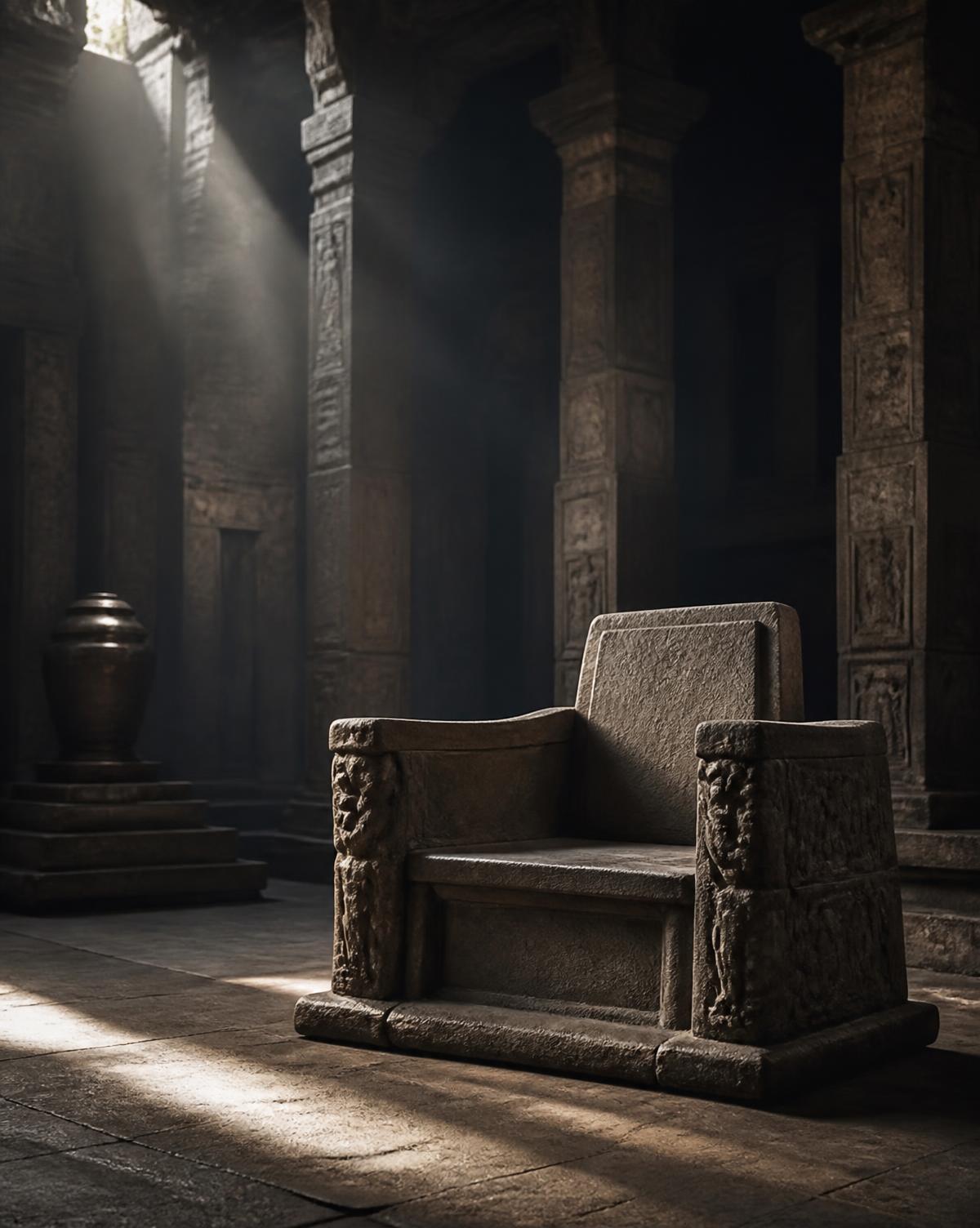
The strongest evidence for Ashoka's response to Kalinga is not a court legend or a modern textbook scene. It is the language he ordered to be cut into rock.
The argument
What the king said happened
Major Rock Edict XIII states that Kalinga was conquered eight years after Ashoka's consecration. The inscription gives immense figures: 150,000 people deported, 100,000 killed and many times that number dead from other consequences. These are claims made in an imperial inscription, not figures independently confirmed by a modern census. Their historical importance lies partly in the fact that the conqueror chose to publish them.
The edict then turns from victory to its human cost. It describes Ashoka's deep regret over slaughter, death and deportation, and over the suffering that spreads beyond those directly harmed: families divided, communities disrupted, ascetics and householders affected. This is not the ordinary language of triumph.
But the inscription does not narrate the schoolbook scene in which one look across a battlefield instantly converts a violent king into a pacifist. Ashoka's relationship with Buddhism and dhamma has a more complicated chronology across the inscriptions. Kalinga is a decisive point in his public account of rule, but it should not be made to carry a conversion biography the contemporary evidence does not supply.
Conquest did not disappear
Rock Edict XIII elevates dhamma-vijaya — conquest by dhamma — above military conquest. Ashoka presents moral influence, restraint and good conduct as the victory he values. Yet in the same edict he addresses forest peoples and warns that the king retains the power to punish, even while desiring that they should not be harmed.
That warning matters. It prevents remorse from being mistaken for the abandonment of coercion. Ashoka did not dissolve the army, end the state or renounce the capacity to enforce imperial order. The language of conquest changed while the machinery of kingship remained.
Remorse did not end Ashoka's power. It changed the language in which he wanted that power to be understood. Whether that language always matched practice is a further historical question; royal inscriptions are evidence, but they are also acts of political self-presentation.
Dhamma became administration
The change was not confined to one declaration. Other inscriptions show Ashoka making dhamma part of administration. Major Rock Edict V records the appointment of dhamma-mahāmātras, officials concerned with the welfare and moral affairs of different communities. Major Rock Edict II speaks of medical provision for people and animals, medicinal plants, wells and trees along roads.
Major Rock Edict XII urges restraint in praising one's own sect while disparaging another, and presents honouring other communities as a way of strengthening one's own. Elsewhere the recurring practical vocabulary of dhamma includes regard for parents and elders, proper treatment of servants and dependants, restraint in killing animals, generosity and attention to justice.
These policies should not be assembled into a flawless portrait of a benevolent modern ruler. They come from the ruler's own proclamations. They do show what he wanted officials and subjects to recognise as legitimate kingship: welfare, restraint, moral conduct and accountability alongside command.
The inscription missing in Kalinga
There is a striking complication in the geography of the edicts. At Dhauli and Jaugada in the Kalinga region, the standard series does not include Major Rock Edicts XI, XII and XIII in the same form. Separate Kalinga Edicts appear there instead, directed towards local administration and the treatment of the newly governed population.
The famous confession of death and deportation is therefore absent in that form at the sites closest to the conquered region. The pattern is verified; its motive is not. Scholars can ask whether audiences, administration or political judgement shaped the choice, but the stone does not give us a private explanation. Source-conscious history must be willing to stop at that boundary.
The emperor and the remembered emperor
Later Buddhist literature created powerful narratives of Ashoka's cruelty, conversion and patronage. The Aśokāvadāna, preserved in a form centuries after his reign, has religious and literary purposes of its own. It is indispensable to understanding how Buddhist communities remembered Ashoka. It is not a contemporary diary of the Kalinga war.
Modern retellings often combine the remorse of Rock Edict XIII with the dramatic conversion structure of later legend, producing a clean biography neither source gives by itself. Separating them does not diminish Ashoka. It makes the historical question more interesting.
What changed after Kalinga was not that power vanished. Ashoka tried to redefine what conquest and kingship should mean while continuing to govern an empire. His inscriptions hold remorse beside authority, welfare beside administration and moral aspiration beside the reserved power to punish. That tension is not an inconvenience in the evidence. It is the evidence.
Why it matters
Dharma Pitch editorial reflection
Ashoka's inscriptions offer a rare ancient ruler's public acknowledgement of suffering caused by conquest, but reading them responsibly requires attention to their coercive and political language too.
Separating inscriptions from later Buddhist narratives keeps both valuable: one as contemporary royal evidence, the other as the history of how Ashoka was remembered.
Source & Context
Major Rock Edict XIII is the primary basis for the Kalinga conquest, inscriptional casualty figures, remorse, dhamma-vijaya and the warning to forest peoples. The numbers are reported as Ashoka's claims, not independently verified statistics.
Major Rock Edicts II, V and XII support the discussion of welfare measures, dhamma officials and relations among sects. The broader administrative picture also draws on the pillar-edict corpus.
At Dhauli and Jaugada, Edicts XI–XIII are absent from the standard sequence and Separate Kalinga Edicts occur instead. The pattern is noted without claiming a certain motive.
Later Buddhist accounts, especially the Aśokāvadāna tradition, are explicitly separated from the third-century BCE inscriptions and treated as later religious memory rather than contemporary biography.
Sources checked
- Major Rock Edict XIIIKalinga, remorse, dhamma-vijaya and forest peoples
- Major Rock Edicts II, V and XIIWelfare, dhamma officials and relations among sects
- Romila Thapar — Aśoka and the Decline of the MauryasInscription translations and historical analysis
The essay prioritises Ashoka's inscriptions, labels their numerical claims as inscriptional, preserves the coercive warning in Edict XIII and distinguishes later Buddhist narrative from contemporary royal evidence.
One question to carry with you
- 01
What does remorse mean when you still retain the power that caused the harm?