The shore was alive with activity.
Across the sea lay Lanka, and Rama's army needed a way to reach it.
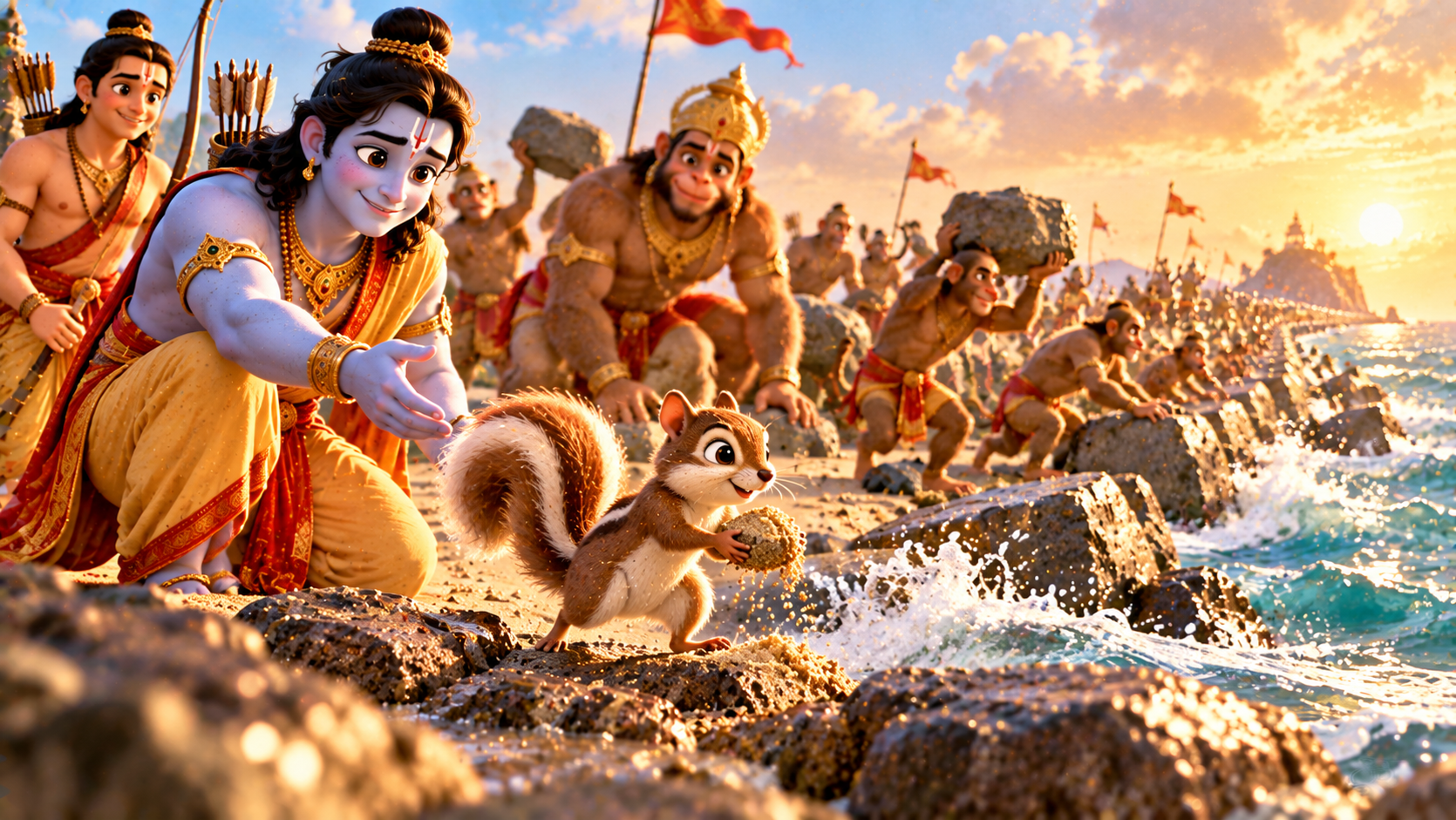
The vanaras were working on an enormous bridge. Great stones were being carried towards the water. Powerful hands lifted rocks that seemed far too heavy to move. Everywhere, there was noise, effort and urgency.
Among all this enormous work was a tiny squirrel.
The squirrel watched the vanaras carrying their great stones. Then it looked at itself.
It could not lift a boulder. It could not carry a mountain.
But it could carry something.
So the little squirrel began helping in the only way it knew how. It gathered tiny pebbles. It carried grains of sand. Back and forth it hurried along the shore, adding its small contribution to the enormous task.
Beside the work of the mighty vanaras, the squirrel's efforts were almost impossible to see.
But the squirrel kept going.
In a beloved later telling of the Ramayana story, Rama noticed the tiny creature working among everyone else. He did not ask why it could not carry what the strongest vanaras carried.
The squirrel was already giving everything it could.
Rama gently stroked its back. And tradition says that the pale stripes seen on Indian palm squirrels are the marks left by Rama's fingers.
If you see a striped squirrel today, you do not have to believe that its stripes literally came from someone's fingers. Animals have biological histories. Stories have histories too.
And this story has survived because generations of people saw something worth remembering in the image of a tiny squirrel standing beside enormous warriors and deciding: I can help too.